

Following my previous post on Function Feature Class (FFC) which provided a free list of examples comprising of the different FFCs which can be found here, I have decided to provide some free data sheets for instructors to test learners in this post. A common question people ask would be “why collect data?“. It is… Continue reading Function Feature Class (Data Sheets)
Tag: Free
Mathematics (Addition)
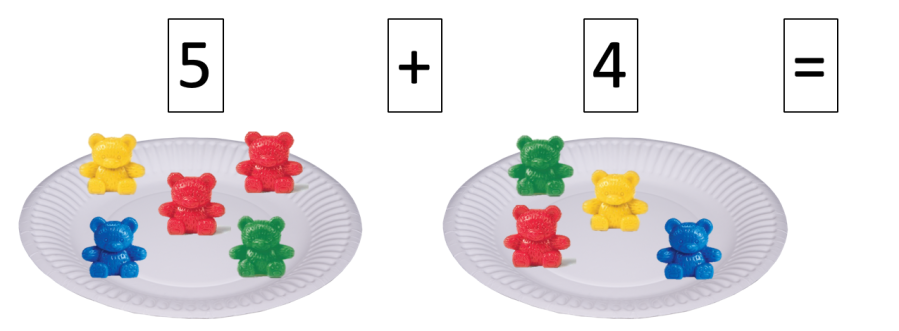
Many parents tend to want to target academic skills such as addition with their child. However, before teaching addition, there is a need to ensure that the learner has met the necessary prerequisite skills (i.e. identifying numbers, counting objects, matching number to quantity, etc.). Should the learner meet the prerequisite skills, we can look at… Continue reading Mathematics (Addition)
Body Parts
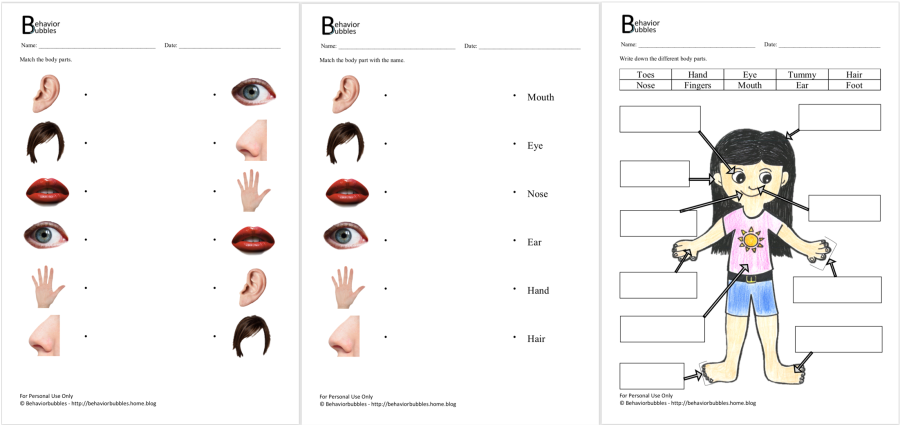
It is important to teach children body parts. It helps them to understand their body and forms an important basis for them to show or tell you where they might feel uncomfortable in future! Receptive Body PartsIn order to teach this skills, you can get the child to receptively identify body parts on themselves (i.e.… Continue reading Body Parts

Mathematics (Number to Quantity)
As a learner is able to count the number of given objects/ pictures independently (i.e. “how many?” – “three bears”) and identify numbers (i.e. “touch 5”, “give me 3”) independently, there is a need to ensure that they learn the relation between the quantity and the number. A way to do this would be to… Continue reading Mathematics (Number to Quantity)

Pronouns (He, She, His, Her)
A common issue parents and educators face is teaching pronouns (i.e. he, she, it, his, her, my, your, we, they, me, you, etc.). In today’s post, we will look at different ways to teach pronouns – specifically he, she, his, and her. Similar with other programs, you can teach pronouns utilising DTT (Discrete trial teaching)… Continue reading Pronouns (He, She, His, Her)

Prepositions
Teaching prepositions is a goal that can be found in various assessments (i.e. ABLLS-R, VB-MAPP). This skill teaches the client locations in comparison to other objects and aids them to understand and provide detailed instructions to others in future. Examples of prepositions include: on, under, beside, in front, behind, inside, between, etc. You can teach… Continue reading Prepositions

 Behavior Bubbles