

According to Cooper, Heron & Heward (2007), imitation is defined as a physical movement serving as a model with the behaviour occurring immediately (i.e. 3 to 5 seconds) following the model. Both the model and the behaviour must match the format shown (i.e. physical with physical, object with object). A learner can imitate a variety… Continue reading Imitation
Category: ABA

Importance of Tacts
Why teach tacts? Tacts (a.k.a. labels) are a way to build up a child’s vocabulary. Teaching more tacts allows a child to learn more words to be able to better express themselves. Thinking about our day to day life, we use a combination of nouns, prepositions, adjectives, adverbs, actions (and more) whilst communicating with our… Continue reading Importance of Tacts

Tact / Label
According to Cooper, Heron & Heward (2007), a “tact is a type of verbal operant in which a speaker names things and actions that the speaker has direct contact with through any of the sense modes.”. As such, a tact is a label that allows one to communicate and express themselves using language (e.g. learner… Continue reading Tact / Label
Contriving Mands
Why teach mands?A mand is the most fundamental building block of language. When babies are born, they mand by crying to express their needs (i.e. milk, sleep, comfort, etc.). Should a child continue to rely on crying to mand as they get older, parents will have to continue guessing what the child is crying for.… Continue reading Contriving Mands

Mands/ Requests
According to Cooper, Heron & Heward (2007), a “mand is a type of verbal operant in which a speaker asks for (or states, demands, implies, etc.) what he needs or wants.”. As such, a mand is a behavior that directly specifies what the speaker wishes to attain, allowing the speaker to attain direct reinforcement for… Continue reading Mands/ Requests

Verbal Operants
Some common terms used by ABA professionals consist of verbal operants. In this post, we will look at the following operants: Mand, Tact, Echoics, Intraverbals, Motor Imitation, & Listener Responding. MandThe learner making a request for something they want.Example: Should the learner want a cookie, they can Mand for the cookie by stating (1) “cookie”;… Continue reading Verbal Operants

Stimulus Equivalence
Stimulus equivalence refers to a learner picking up additional relations between stimuli not explicitly taught to them after they are taught simple relations between stimuli (Arntzen & Vaidya, 2008). This concept allows the learner to learn more in a shorter amount of time by allowing the client to derive/ “self-learn” different concepts independently without teaching… Continue reading Stimulus Equivalence

Function Feature Class (Data Sheets)
Following my previous post on Function Feature Class (FFC) which provided a free list of examples comprising of the different FFCs which can be found here, I have decided to provide some free data sheets for instructors to test learners in this post. A common question people ask would be “why collect data?“. It is… Continue reading Function Feature Class (Data Sheets)
Mathematics (Addition)
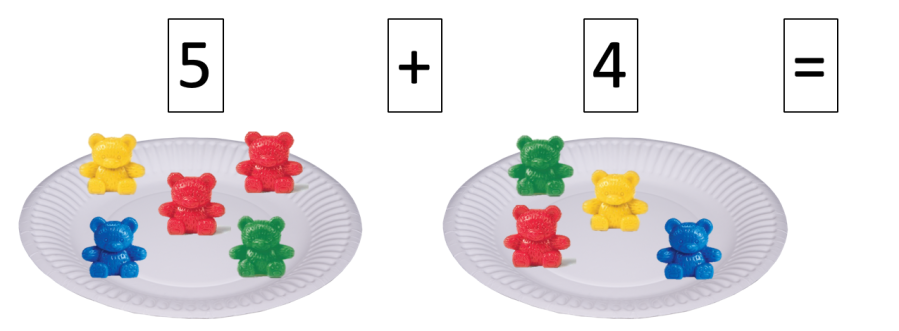
Many parents tend to want to target academic skills such as addition with their child. However, before teaching addition, there is a need to ensure that the learner has met the necessary prerequisite skills (i.e. identifying numbers, counting objects, matching number to quantity, etc.). Should the learner meet the prerequisite skills, we can look at… Continue reading Mathematics (Addition)

Preposition (Worksheets)
What are prepositions? Prepositions are words that denote the relation of things in relation to each other. Examples of prepositions include: on, under, in front, behind, beside, between, above, and amongst. For those who want a more detailed explanation on how to teach prepositions, click on the link to my previous post on prepositions where… Continue reading Preposition (Worksheets)

 Behavior Bubbles